
Comprehensive Pharmacology Textbooks and Pharmacology Learning Resources for Pharmacy Students
- InfoMed Books Internationals
- Jun 29
- 3 min read

Pharmacology is a core subject for pharmacy students. It covers how drugs work, their effects, and their safe use. To master pharmacology, students need reliable and detailed study materials. Comprehensive pharmacology textbooks provide this foundation. They explain drug mechanisms, classifications, and clinical applications clearly. These textbooks support learning and help students prepare for exams and professional practice.
Essential Pharmacology Learning Resources
Pharmacology learning resources go beyond textbooks. They include lecture notes, online videos, flashcards, and question banks. However, textbooks remain the most trusted source for in-depth knowledge. A good pharmacology textbook organizes information logically. It covers drug groups, pharmacokinetics, pharmacodynamics, and adverse effects. It also includes clinical cases and practice questions.
When choosing pharmacology learning resources, consider the following:
Clarity: The content should be easy to understand.
Depth: It must cover basic and advanced topics.
Updates: The latest editions include new drugs and guidelines.
Illustrations: Diagrams and tables help visualize concepts.
Practice material: Questions and case studies reinforce learning.
Using a combination of textbooks and supplementary resources enhances comprehension. For example, after reading a chapter, watching a related video or solving quiz questions can improve retention.

How can I memorize pharmacology easily?
Memorizing pharmacology can be challenging due to the volume of information. Here are practical tips to make it easier:
Use mnemonics: Create simple phrases to remember drug classes or side effects.
Group drugs: Study drugs by their class or mechanism of action.
Make flashcards: Write drug names on one side and key facts on the other.
Repeat regularly: Review material frequently to move information to long-term memory.
Apply knowledge: Use clinical scenarios to understand drug use in practice.
Visual aids: Use charts and diagrams to link concepts visually.
Teach others: Explaining topics to peers reinforces your understanding.
Consistent study habits and active recall techniques improve memorization. Avoid cramming and focus on understanding drug actions and effects.
Recommended Comprehensive Pharmacology Textbooks
Several textbooks stand out for their comprehensive coverage and clarity. These books are widely used by pharmacy students and professionals:
Basic and Clinical Pharmacology by Bertram Katzung: Known for clear explanations and clinical relevance.
Rang & Dale’s Pharmacology: Offers detailed mechanisms and updated drug information.
Goodman & Gilman’s The Pharmacological Basis of Therapeutics: A classic reference with in-depth content.
Lippincott’s Illustrated Reviews: Pharmacology: Combines concise text with helpful illustrations.
Pharmacology Made Ridiculously Simple: Simplifies complex topics for quick learning.
Each textbook has strengths. Some focus more on clinical applications, while others emphasize basic science. Choosing the right book depends on your learning style and course requirements.
For a comprehensive collection, consider exploring pharmacology textbooks for pharmacy students available at InfoMed Bookshop. This platform offers a wide range of essential learning materials tailored for pharmacy education.
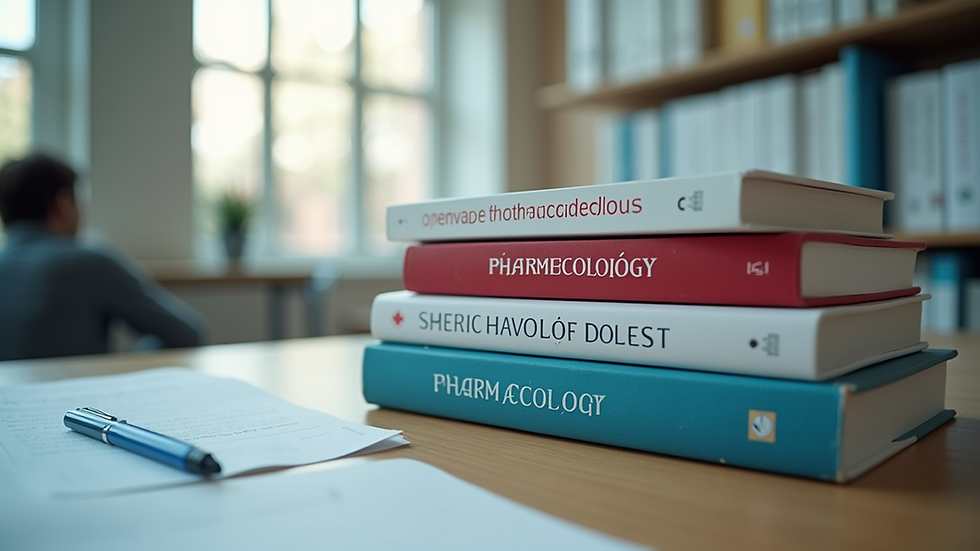
How to Use Pharmacology Textbooks Effectively
To get the most from pharmacology textbooks, follow these strategies:
Set study goals: Define what topics to cover each day.
Take notes: Summarize key points in your own words.
Highlight important facts: Use color coding for drug classes, side effects, and interactions.
Practice questions: Attempt end-of-chapter quizzes to test understanding.
Review regularly: Revisit difficult topics multiple times.
Integrate with lectures: Align textbook reading with class content.
Use supplementary materials: Combine textbooks with videos and flashcards.
Active reading and consistent revision help retain complex pharmacology concepts. Avoid passive reading, which leads to poor recall.
Preparing for Exams with Pharmacology Textbooks
Exams in pharmacology test both knowledge and application. Textbooks provide the foundation for exam preparation. Here are tips to prepare effectively:
Focus on high-yield topics: Prioritize drugs commonly tested.
Understand drug mechanisms: Don’t just memorize names; know how drugs work.
Learn side effects and contraindications: These are frequently asked in exams.
Practice clinical cases: Apply knowledge to patient scenarios.
Use question banks: Simulate exam conditions with practice tests.
Form study groups: Discussing topics with peers clarifies doubts.
Using pharmacology textbooks alongside active study methods improves exam performance. Consistent effort over time is key.
Final Thoughts on Pharmacology Learning Resources
Pharmacology is a vast subject that requires reliable resources. Comprehensive textbooks form the backbone of effective learning. They provide detailed, structured, and updated information essential for pharmacy students. Combining textbooks with other learning tools enhances understanding and retention.
For those seeking quality materials, InfoMed Bookshop offers a trusted collection of pharmacology textbooks and other resources. This makes it easier to access everything needed for success in pharmacy education.
Invest time in choosing the right textbooks and study methods. This approach builds a strong foundation in pharmacology, supporting both academic and professional growth.



Comments